Festivals
Festivals are a way in which the children, teachers, staff and the wider school community, mark the passing of time through each year and the mood of the different seasons. We aim to foster a sense of belonging, at St Paul's, the wider London community but also in the natural world.
Taking part in transitional festivals taken from cultures across the world is an important part of the curriculum, giving students an understanding and respect for the different cultures of the world. Drawing on many traditions, through the festivals we celebrate our common humanity, not our separateness in belief or practice.
Some of the festivals we celebrate include:
Michaelmas
In a similar vein to the many harvest festivals around the world in September, Michaelmas is both a celebration of the fecundity of the season and a preparation for the long winter months ahead. Our school community offer donations of food and work collectively in cleaning, planting, pruning and harvesting in an effort to prepare for the long dark months of winter. The Michaelmas festival is an opportunity to celebrate together the final harvest fruits, taking heed of our environment in a bid to imbue the spirit of the season within us all.
Firstly, the whole school gathers with their parents on the Green for a Michaelmas play, showcasing their rehearsals of singing, acting and reciting poetry.
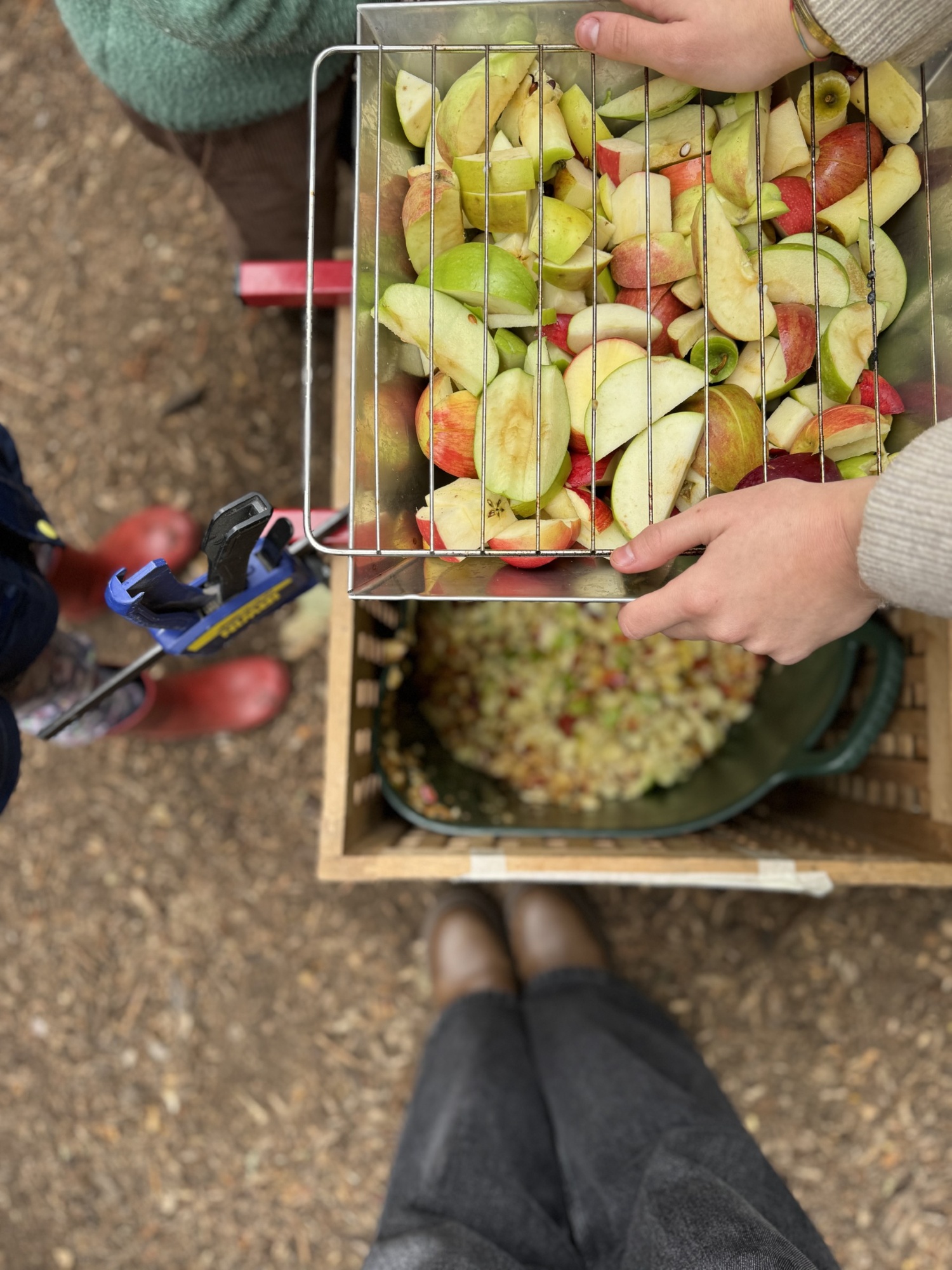
Kindergarten has a family day and spends the morning juicing apples, churning butter, washing wool, making bread and chopping vegetables for soup together.
The classes spend the afternoon together playing games after a morning of similar activity. The Middle School come together in the Nave for a feast after working in the gardens in our community areas and helping make the components of the feast.
Rosh Hashanah
We mark Rosh Hashanah with challah bread dipped in honey and apples, along with the other main Jewish Festivals of the year, guided by the many Jewish families in our School. It is a tradition in our school for class III to build a Sukkut in the garden a few weeks later and have a visit from a Rabbi.
Martinmas
Martinmas is one of many festivals of light celebrated during the darker months. In Europe, Martinmas celebrates the life of St. Martin of Tours (316-397AD), a patron saint of France associated with helping the poor. St. Martin is remembered for the way he practised brotherliness towards everyone he met and for his ability to bring light to those previously in darkness. In Waldorf schools, the traditional way of celebrating this festival is a lantern walk. The Kindergarten and Lower School Class children make lanterns in school and the younger children go on a Lantern Walk in the evening with their teachers and parents in the local area singing songs. The lanterns catch the last of the sun’s Autumn rays and bring this light into our homes, to brighten long winter evenings ahead.
Diwali
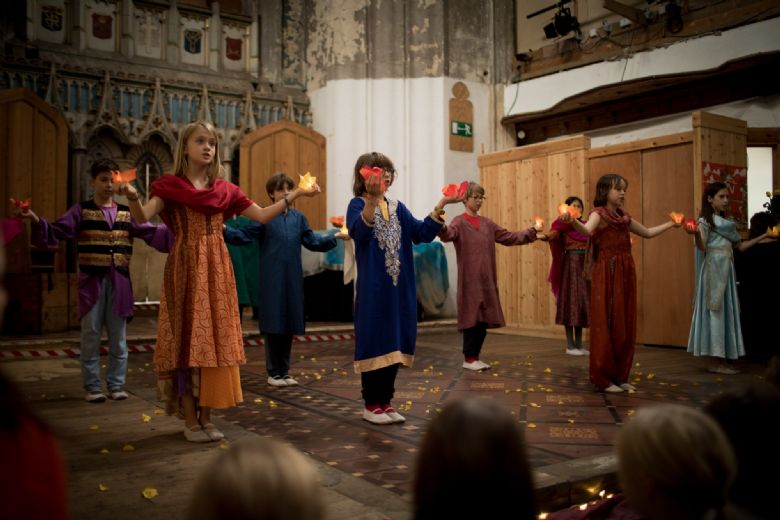
Class V learn about the Hindu Festival of Diwali as part of their Main Lesson Block, Ancient India. They visit a Hindu Temple and make a mandala in the middle of the Nave. Class V parents and the whole School are invited to listen to them sing and perform a traditional dance around it. It is a beautiful moment of reverence for the season, celebrating the light in the darkness.
In Kindergarten, the teachers make a mandala for the table and celebrate and kindle their inner light with candles.
Advent Spiral
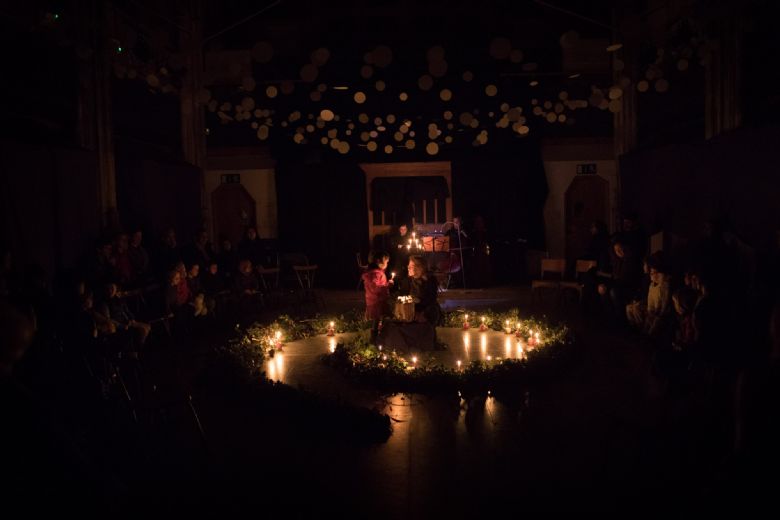
The Advent Spiral is perhaps the most profoundly moving community festival of our year. The spiral image can be found in all cultures and is one of nature’s many patterns. This festival honours the inner light brought into the world, and we use the spiral to represent the contemplative journey we take to share our own inner light. From Kindergarten to Class VIII, each child and teacher in turn light their own candle from a central flame by walking a spiral path of greenery, and the collective light spreads throughout the Nave.
Our Parent Community Group organise the collection of the greenery from our friends in neighbourhood parks. The spiral, sometimes referred to as a winter garden, is created by the teachers after a short day. This Festival is held in the evening when it is dark and children attend with their parents.
Wellbeing Festival
In January we have a wellbeing Festival.Children in Kindergarten might have footpath to have a sensory experience of wellbeing and in school there is a day of both experiencing and learning about wellbeing. It might be through nutrition, movement, gong baths or creative pursuits. The pupils have a day in mixed age groups.
Candlemas
"The festival of lights is the promise of Spring
Amid the cold of Winter's dire sting
Snowdrops poke their heads through the soil
To herald the breaking of Winter's bleak toil"
This crosspoint in the year, between the midwinter and spring equinox is significant in many cultures, our Irish families might mark St Bridgit. The cyclical year has several beginnings, and this time of the year certainly feels like a starting point in nature with the energy encapsuled in the seeds and hibernating animals’ awakening.
All the children patiently take it in turns to dip their candle wicks into the melted bees wax and slowly a candle emerges, getting bigger with each dip. They bring the candle home to light at the dinner table. In Kindergarten, the children pour wax into holes in the ground to make nature candles.
Nowrus
Nowrus is the Ancient Persian New Year celebration which falls on the spring equinox. It is celebrated by 300 million people, and it is one of the oldest religions. It will be noticed on the nature table at the entrance of the school. In Class V they will have heard the stories behind this Ancient culture and know the symbolic items on the table.
Lunar new year
The bright red lantern at the entrance of the school lets us know we are in the Lunar New Year season. In the younger classes, the stories about the great race, zodiac and the dragon are told.
Eid
Eid is marked in the school with displays at the entrance. The end of Ramadan has been celebrated by a class for prayer and sharing of dates. In the curriculum, the importance of Islam and the contributions of scholars from Ancient Babylonians to medieval Arabs in Mathematics, Geometry, Astronomy, Science and Law is explored in class VI/VII.
Whitsun
"Shine little light, shine so bright
Shine with all thy might
Make me strong
Make me bold
Turn my words to living gold"
The festival of Whitsun is celebrated by making paper doves, peace mandala and coming together to sing, recite a verse in the many different languages in St Paul's as a symbol of peace and unity. It is a celebration of all the different cultures within our diverse community, with about 30 home languages, spreading love and a spirit of understanding into the world.
Kindergarten come together for the first part of the morning and share their languages, a small natural gift for the natural mandala. The classes come together in school to sing and celebrate peace.
May Day
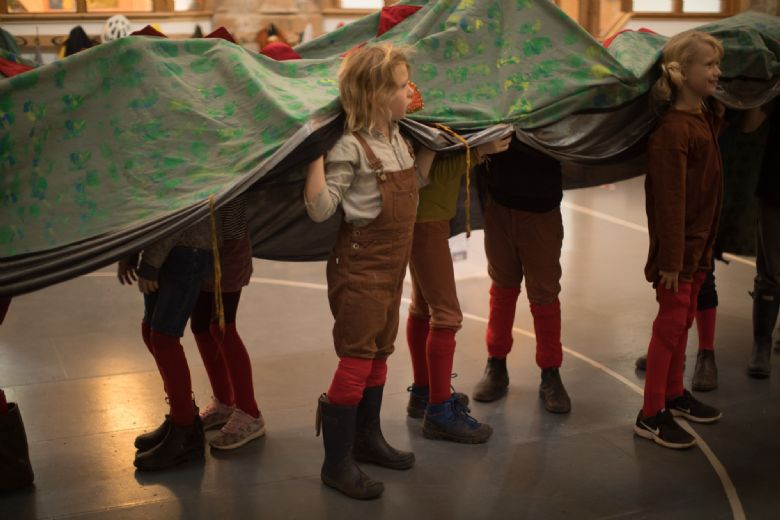
This is a wonderful celebratory festival where the whole School come together for a picnic and dancing around the may pole or folk-dancing, usually in Hampstead Heath. Parents bring their children to the Heath and join together to share food, music and song, wearing woven raffia crowns festooned with flowers. It is always on the Friday before the first May bank holiday.
St John's
This is a high energy mid-summer festival and much loved by the children! In the Christian tradition, St John's Day is the feast of the birthday of St John the Baptist, who prepared the way for Christ and baptized him in the River Jordan.
St John’s day is celebrated three days after the summer solstice. The summer solstice, or midsummer, marks both the longest day and the shortest night of the year in the Northern Hemisphere. The solstice is celebrated across the world, under many different names and traditions.
In Celtic times, fires would be lit across hilltops, and people stayed up all night in order to watch the sunrise. In ancient China, feminine “yin” forces and the Earth were worshipped at midsummer. To celebrate, women gave colourful fans and perfumed sachets to one another. In this part of the world, it is considered auspicious to eat noodles on the summer solstice and dumplings on the winter solstice.
To celebrate this special time of the year, we jump over a solstice fire. The children are asked to think about something they wish to let go of or work towards during the rest of the year. This they will write on paper, placing it into the fire before they leap over the flames. Singing, drumming and clapping encourage all to be brave as each takes their turn. The children then cool down with a delicious slice of watermelon.
Traditionally, we wear fire colours on this day, red, orange or yellow.
‘Small plants, leaves and buds, growing in the soil. O fiery sun, may your rays of light and warmth bless us with abundance, and allow these plants to blossom with life.’
Grianstad an tsamhraidh shona duit!
Happy summer solstice!
Windrush Festival
The Windrush day is a day celebrating the many contributions of the Wndrush generation and their descendants and the wider Caribbean community. It is a day of food, music and dancing. We are delighted to welcome a steel band every year in our garden and classes take turns dancing and eating food prepared by our own community.